

The Coherence Method
An ancient art. A modern understanding. One method.
The Coherence Method is a way of listening to your body as one living system, and letting what I find guide every touch.
My philosophy
Listening, not fixing.
I begin every session by listening: to your breath, to the way your tissue meets my hands, to where you’re holding and where you’re already soft. Your body carries wisdom. My work is to hear it and clear the way.
Your body is wise. It already knows the way home.
The body I work with
Seven systems, one conversation.
Healing flows beneath the surface. These are the systems my hands listen to most closely. Choose one to see what it is, how I work with it, and a small practice to try at home.
Water
Your inner river
What it is
A quiet river beneath your skin. Your lymphatic system gathers the fluid that bathes every cell and carries away what your tissues no longer need: cellular waste, debris and microbes, filtered through clusters of lymph nodes in your neck, armpits, belly and groin before the fluid returns to your bloodstream, along with the immune cells it carries. Your nervous system has its own rinse, too: during deep sleep, cerebrospinal fluid washes through the brain and drains through lymphatic vessels, clearing what the day leaves behind. Lymph has no central pump. It moves with breath, muscle movement, the gentle pulsing of its own vessels, and slow, rhythmic touch.
How I work with it
Light, slow, rhythmic strokes that gently stretch the skin, barely more than the weight of my hand. I clear the areas nearest the nodes first so fluid has somewhere to go, then work outward. As fascia unwinds, I follow with lymph work so fluid can move through freely and rinse the tissue.
What you might notice
Feeling lighter or less puffy, a clearer head, often a deep, sleepy calm, and for many clients a sense of emotional release, as if something long carried has finally been set down.
Try this at home
Before you shower, stroke or softly brush your skin toward your heart: start at your neck and collarbones, then your arms and legs, always moving toward your center. Keep to calm, healthy skin.
The science underneath
Established: lymph carries cellular waste, debris and immune cells to the lymph nodes and is central to fluid balance. Emerging: research on the brain’s own clearing system and the lymphatic vessels around the brain is growing quickly. Manual lymphatic drainage has strong evidence in lymphedema care, as part of complete decongestive therapy, and growing evidence after surgery. Experiential: the emotional release many clients describe.
Earth
The connective tissue of everything
What it is
Fascia wraps every muscle, and every fiber within each muscle, and surrounds your bones, nerves, vessels and organs: one continuous web from head to toe. Your tendons and ligaments are part of the same connective tissue family, denser weaves of the same living fabric. Healthy fascia is hydrated and gliding. It carries force across your whole body and is rich in sensory nerves, which is part of why tension in one place can be felt somewhere far away.
How I work with it
In my experience, fascia is also our shield from the world. Over a lifetime it takes the shape of what we have lived through: bracing, guarding and holding patterns formed in the moments our bodies needed to survive. Unwinding those patterns is a large part of my work. I use slow, sustained contact, sink in only as far as the tissue invites, and follow its lines as it lets go, never forcing a release. Then lymph work helps fluid move through and rinse the tissue, physically and, as many clients feel, emotionally.
What you might notice
Warmth, a sense of melting or unwinding, easier movement, release in places my hands aren’t touching, and sometimes emotion rising and moving through.
Try this at home
Melting stretch: find a gentle stretch, well short of your edge, and stay for two to three minutes. Breathe slowly and let the tissue soften instead of pushing deeper.
The science underneath
Established: fascia is a continuous, richly innervated connective tissue network, continuous with tendons and ligaments, that transmits force across the body. Emerging: how fascia responds to touch, and how stress and protective guarding shape it over time, with research from Helene Langevin, Carla Stecco and others. Experiential: fascia as an emotional shield, and the unwinding of holding patterns, drawn from my practice and lineage.
Air
The keeper of safety
What it is
Your brain, spinal cord and the nerves that reach every part of you. Its autonomic branch sets your heart rate, breath, digestion and muscle tone outside your awareness, shifting between alert and mobilized (sympathetic) and resting and digesting (parasympathetic).
How I work with it
Predictable, unhurried touch, with your consent at every step. I pace the work to what your system can receive, and watch your breath and tissue for signs that you’re settling.
What you might notice
Spontaneous sighs or yawns, a gurgling belly, heavy limbs, sometimes tears, and a quiet, sleepy presence.
Try this at home
Orienting: slowly let your eyes wander around the room, resting on colors, shapes and textures. Then take one long, unhurried exhale, or hum softly as you breathe out.
The science underneath
Established: your skin holds C-tactile nerve fibers that respond best to slow, gentle touch and are linked to feelings of safety and connection. Emerging: manual therapy can bring short-term changes in the autonomic nervous system, but how specific and lasting they are isn’t yet settled.
Ether
The still center
What it is
The bones of your skull, your spine and your sacrum, and the membranes that wrap your brain and spinal cord. Inside them flows cerebrospinal fluid, which cushions and nourishes your nervous system and is renewed several times a day. Research suggests that during deep sleep this fluid also moves through the brain itself, helping it clear what it no longer needs.
How I work with it
Very light holds at your head, spine, sacrum and feet. I listen for the body’s subtle rhythms and wait for stillness: the pause where your whole system can reorganize.
What you might notice
Deep stillness, a floating or dreamlike quality, warmth, and rest that can feel deeper than sleep.
Try this at home
Lie on your back and cradle the base of your skull in your palms. Let your head grow heavy in your hands and take five slow breaths.
The science underneath
Established: cerebrospinal fluid cushions the brain and spinal cord and is continually renewed. Emerging: research on the brain’s clearing system during sleep is growing, and some trials show craniosacral therapy helps chronic pain and wellbeing, while the idea of a cranial rhythm felt by hand is still debated. Traditional: Sutherland’s cranial work and Core Synchronism.
Air
The body’s inner pump
What it is
Your diaphragm is a dome of muscle beneath your ribs, anchored to your spine and lower ribs. Each breath changes the pressure in your chest and belly, which helps blood and lymph return to your heart and gently moves your organs. How you breathe is also one of the clearest signals of how safe you feel.
How I work with it
I free the ribs, the diaphragm’s edges and the upper belly, then follow your breath rather than lead it, inviting a longer, easier exhale.
What you might notice
Ribs that move more freely, a softer belly, and a full breath that seems to arrive on its own.
Try this at home
Rest one hand on your belly and one on your lower ribs. Breathe in gently through your nose, then let a long exhale leave through softly pursed lips. Repeat three times.
The science underneath
Established: breathing creates pressure changes that help return blood and lymph to the heart. Established and emerging: slow breathing raises heart rate variability, one measurable marker of a shift toward rest.
Fire
Where nourishment becomes you
What it is
Your organs are held in place by fascia and ligaments and glide against each other with every breath. Your gut has its own web of nerves and is in constant conversation with your brain, much of it through the vagus nerve. Digestion works best when your body is at rest.
How I work with it
Gentle, slow work around the belly, only with your consent and at your pace, to support ease and movement in this space. This is also where my herbal and food guidance lives.
What you might notice
Gurgling, warmth, a softer belly, and sometimes easier digestion in the days after.
Try this at home
With warm hands, make slow clockwise circles on your belly, following the path of your large intestine: up your right side, across, and down your left.
The science underneath
Established: the gut and brain communicate through the vagus nerve and the gut’s own nervous system, and digestion favors a resting state. Emerging: research on hands-on work with the organs is still limited. Herbal and food guidance is general education, never a prescription.
Ether
The spaces where movement begins
What it is
Your spine is a column of vertebrae and cushioning discs, with gentle curves that carry your weight, protect your spinal cord and let you bend and turn. Every joint is a meeting place of bones, lined with cartilage and bathed in fluid, and movement is what keeps that fluid circulating.
How I work with it
Gentle, comfortable movement and positioning, and slow release of the tissue around each joint so it can find its space and glide freely. In polarity tradition, these open spaces belong to ether.
What you might notice
Easier movement, more range without effort, and a sense of standing taller and lighter.
Try this at home
Sitting tall, nod your head slowly: yes, then no, then a small maybe. Pair each movement with a slow breath and keep it easy.
The science underneath
Established: joint cartilage depends on movement to circulate its fluid and nutrients. Emerging: research on manual therapy for back and neck comfort shows modest, mostly short-term benefit.
These are gentle practices, not treatment. Stop anything that hurts, and check with your doctor first if you’re pregnant, recovering from surgery, or managing a health condition.
The web of flow
When the body is out of balance, it’s rarely just one system that struggles. Your lymph, your fascia and your nervous system are woven together, and when one is stuck, the others feel it.
When the body braces
Stress or strainThe nervous system goes on alertMuscle and fascia guardBreath shortens, fluid slowsYou feel heavier, tighter, more on edgeWhen the body feels safe
Slow, attuned touchThe nervous system settlesBreath deepens, fascia softensFluid moves more freelyYou come back into balanceWhen one system flows, the others follow.
This is a pattern I see on my table every day. Research supports many of its pieces, and the whole picture is still being studied.
How I work
Five promises I keep on my table.
- I listen before I move.Sometimes we begin far from where it hurts.
- I work with the whole of you.Muscle, fascia, joints, breath, fluid and nervous system all shape one another.
- Your body leads.A softer breath or a release of guarding tells me what comes next.
- Less is often more.The right touch is the one your body can receive.
- Presence is part of the medicine.Consent, attention and care are not extras. They are the work.
A session, from feet to field
Every session opens with the same quiet sequence, beginning at your feet. It isn’t a ritual every body must need; it’s how I meet you, gather what your body is telling me today, and choose where to begin.
From there I work in a living loop. I offer touch, I watch how you respond, and I adjust: pressure, pace, direction and where my hands go next. If your body changes the plan, the plan changes. At the end we slow down together, so you can land, notice what has shifted, and carry it home.
As your body returns to flow, you might notice a spontaneous sigh or yawn, warmth or tingling moving through you, a deeper breath, easier movement, or simply feeling lighter and more like yourself.
Five lineages, one practice
What I draw from, and where it comes from.
I trained in each of these at the New Mexico School of Natural Therapeutics, and I’ve since completed further certification programs in every one of them.
Spinal Energetics and a 1,000 hour somatic certification through The Embody Lab deepen how I attune to your nervous system through touch.
Read where I trained, and the family I learned fromThe heart of the method
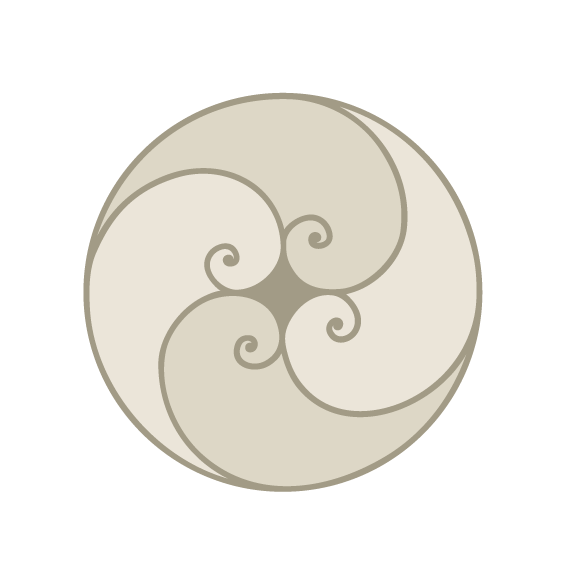
Five elements, spiraling around a still center.
At the heart of the Coherence Method is the oldest map I know. In polarity tradition, earth, water, air and fire move around ether, the space that holds them all. Each one lives in your body. Choose an element to see what it holds in my work.

Plasma, fluids, joints
The space between
At the center of every spiral is stillness. Plasma is my word for the fluid ground of the body: the plasma of your blood, the fluid that bathes every cell, the cerebrospinal fluid around your brain and spine. Ether also lives in the open spaces of the joints, where all movement begins. When I work here, I’m listening for the pause where your whole system can reorganize.
The science underneath
Lymph begins as blood plasma: fluid leaves the bloodstream, bathes every cell, and returns through the lymphatic vessels, carrying charged minerals as it goes (established physiology). In polarity tradition, ether is the element of space that holds the other four (traditional).

Fascia and structure
What your body holds
Earth is your structure: the living web of fascia that wraps every muscle, organ and nerve, and holds the shape of everything you’ve carried. Slow, sustained contact lets that web soften on its own terms, never by force.
The science underneath
Fascia is a continuous, richly innervated connective tissue network that transmits force across the body, which may help explain why touch can be felt far from where it lands. Research by Helene Langevin, Carla Stecco and others continues to deepen this picture (established anatomy, emerging research).

Lymph and flow, tides and rhythm
The tides of your fluid body
Water is your flow: the lymph that moves quietly beneath the skin, and the slow tides and rhythms my lineage teaches me to feel. Gentle, rhythmic strokes invite fluid to move where it has gathered and stalled.
The science underneath
Manual lymphatic drainage has strong evidence for lymphedema as part of complete decongestive therapy, and growing evidence after surgery (established and emerging). The tide is the image the cranial tradition uses for the body’s slow rhythms (traditional).

Breath, heart and circulation
Breath and heart
Air is your breath and the rhythm of your heart. As your breath slows and deepens on the table, your heart settles into a steadier pattern and your whole body follows it toward rest.
The science underneath
Breathing changes rib motion, abdominal pressure and venous return, and slow breathing shifts the nervous system toward rest; heart rate variability is one measurable marker of that shift. Heart rhythm coherence, a steady rhythm linked to slow breathing, is the research echo of this method’s name (established and emerging).

Digestion and metabolism, vitality and will
How nourishment becomes life
Fire is transformation: digestion, metabolism, the warmth that turns food into you, and the vitality and will that carry you forward. This is where my herbal and food guidance lives, offered alongside the bodywork when your body asks for it.
The science underneath
Your gut and nervous system are in constant conversation, and the body digests best when it’s at rest (established). Herbal and food guidance is general education offered in session, never a prescription. In polarity tradition, fire’s quality is hunger and drive (traditional).
“See the stillness at the center and the spiral movement.”
Dr. William Garner Sutherland
The body tells a story
Every body remembers.
On my own path I found my body’s imprints: old fear in my hips, worry in my belly, grief in my chest. Learning to listen to them became part of my healing, and many people notice something similar. Words left unsaid can gather in the jaw. Shoulders carry weight that belongs to someone else. The breath shortens when we brace against feeling. Think of these as invitations to notice and to soften; your body may tell its own story.
Every ache is an invitation to presence.
Science and the sacred
How I keep this work honest.
I hold intuition and science side by side without pretending they are the same thing. Everything I share about this work sits somewhere on this ladder.
Where this work fits
This work supports your wellbeing alongside your doctors, physical therapists and mental health care, and always in step with them. Intuition and science work together here: what I feel with my hands I translate into what I can observe, and I check it against how your body responds. And every technique I use is chosen because it serves you.
Go deeper: selected sources
Roura S, Álvarez G, Solà I, Cerritelli F. Do manual therapies have a specific autonomic effect? An overview of systematic reviews. PLoS One. 2021.
Moore JE Jr, Bertram CD. Lymphatic System Flows. Annual Review of Fluid Mechanics. 2018.
Breslin JW et al. Lymphatic Vessel Network Structure and Physiology. Comprehensive Physiology. 2018.
Negrini D, Moriondo A. Lymphatic anatomy and biomechanics. Journal of Physiology. 2011.
These support the physiology underneath the work, rather than the Coherence Method as a whole.
Every softening is your body remembering its way home.
New clients begin with a two hour first visit. From there, if it feels right for both of us, The Coherence Method: A Five Session Path.
Hold my placeNext: meet Heather and the lineage behind this work